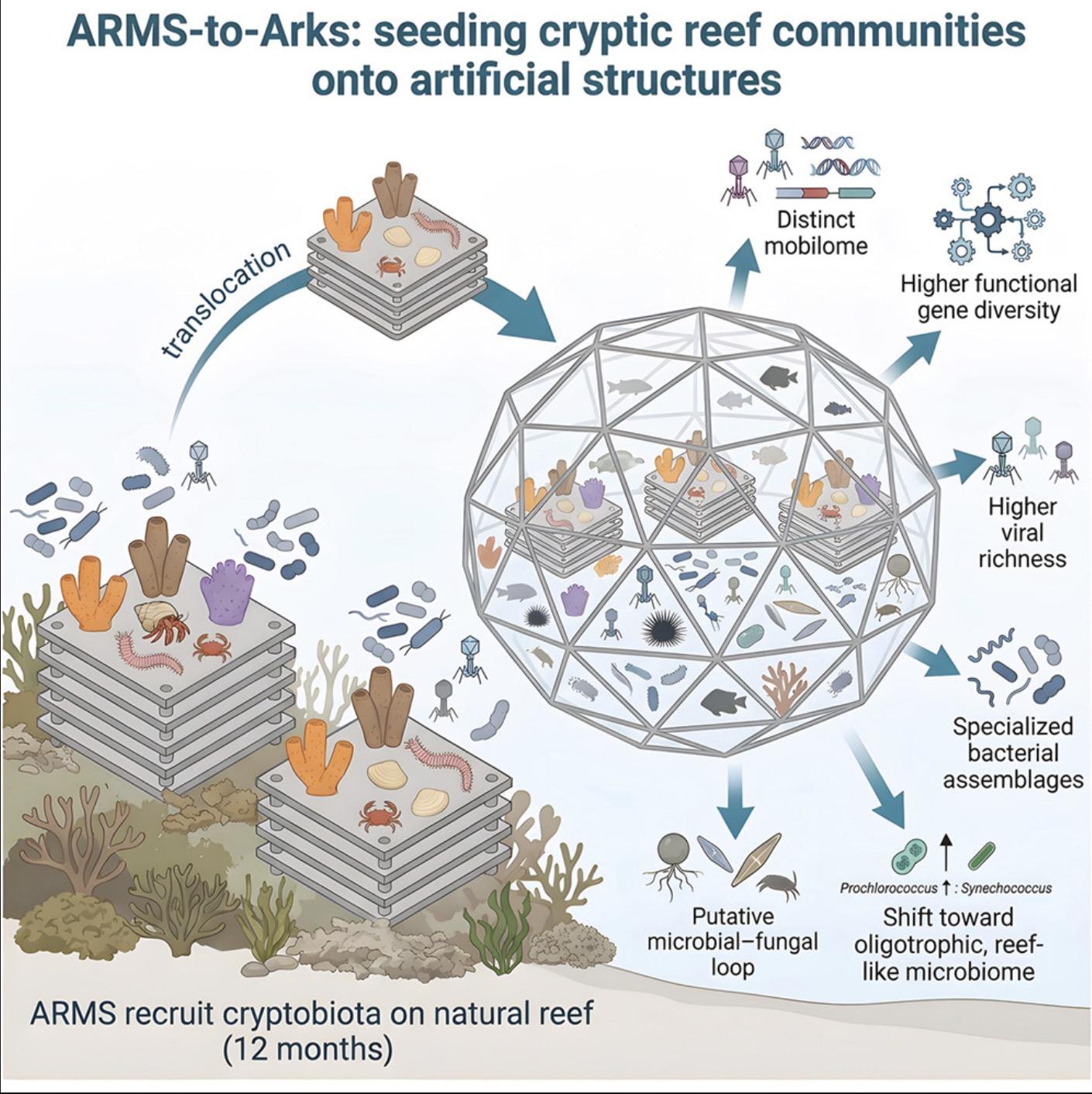
{"@context":["https://www.w3.org/ns/activitystreams",{"Hashtag":"as:Hashtag","sensitive":"as:sensitive","dcterms":"http://purl.org/dc/terms/","gts":"https://gotosocial.org/ns#","schema":"http://schema.org/","exifData":"schema:exifData","PropertyValue":"schema:PropertyValue","interactionPolicy":{"@id":"gts:interactionPolicy","@type":"@id"},"canQuote":{"@id":"gts:canQuote","@type":"@id"},"canReply":{"@id":"gts:canReply","@type":"@id"},"canLike":{"@id":"gts:canLike","@type":"@id"},"canAnnounce":{"@id":"gts:canAnnounce","@type":"@id"},"automaticApproval":{"@id":"gts:automaticApproval","@type":"@id"},"manualApproval":{"@id":"gts:manualApproval","@type":"@id"},"always":{"@id":"gts:always","@type":"@id"},"toot":"http://joinmastodon.org/ns#","blurhash":"toot:blurhash"}],"id":"https://pasquines.us/?p=26388","type":"Article","attachment":[{"type":"Image","url":"https://pasquines.us/wp-content/uploads/2026/07/Coral-Ark-Vieques-Puerto-Rico-1024x576.jpg","mediaType":"image/jpeg","name":"A Coral Ark suspended in the water column off Vieques, Puerto Rico. These engineered, midwater structures hold transplanted reef communities away from the degraded seafloor.","blurhash":"UZ5Pk{adR@oftWfRWFj]XDj@joaxRrj]oaa#"},{"type":"Image","url":"https://pasquines.us/wp-content/uploads/2026/07/arms_to_arks-graphic-1024x1024.jpg","mediaType":"image/jpeg","name":"How ARMS-to-Arks works. ARMS units (stacked plates, left) collect the hidden biological community of a natural reef over 12 months. The fully colonized units are then transferred into a Coral Ark (center), suspended in open water. Over the following year the community reorganizes into something more reef-like.","blurhash":"URP72-R4t7t7_N%gxuaextWBozxuM{MxRjWC"}],"attributedTo":"https://pasquines.us/?author=4","content":"\u003Cp\u003EA new study conducted off the coast of Vieques, Puerto Rico has shown that the invisible microbial communities that make coral reefs function \u003Ca href=\u0022https://www.perryinstitute.org/arms-to-arks-coral-reef-microbiome-restoration/\u0022\u003Ecan be transplanted from one reef to another\u003C/a\u003E and onto an artificial structure\u2014where they reorganize into a new, functioning community. The findings, published June 25, 2026, in the \u003Ca href=\u0022https://www.sciencedirect.com/science/article/abs/pii/S2590332226001429\u0022\u003ECell Press journal One Earth\u003C/a\u003E, point to a tool that could broaden reef restoration beyond corals alone.\u003C/p\u003E\u003Cp\u003EThe research was led by Dr. Mark Little and Dr. Aaron Hartmann, both research scientists at the \u003Ca href=\u0022https://www.perryinstitute.org/\u0022\u003EPerry Institute for Marine Science\u003C/a\u003E. Most reef restoration focuses on what people can see\u2014chiefly outplanting corals\u2014but the overwhelming majority of a reef\u0026#8217;s biodiversity is microscopic. These hidden communities of viruses, bacteria, and other microbes run the nutrient cycling, disease regulation, and energy transfer that keep reefs healthy.\u003C/p\u003E\u003Cp\u003E\u0026#8220;When people picture a reef, they think of corals and fish, but the overwhelming majority of a reef\u0026#8217;s biodiversity is microscopic and easy to overlook,\u0026#8221; Little said. \u0026#8220;What this work shows is that you can move that hidden community as a living, intact unit, and once you do, the whole system starts to behave more like a real reef.\u0026#8221;\u003C/p\u003E\u003Cp\u003EThe significance of this research extends directly to the US territories, where coral reefs are \u003Ca href=\u0022https://storymaps.arcgis.com/stories/2f4d8f08d6a04eba82d7af7622f20f3b\u0022\u003Efoundational to coastal protection\u003C/a\u003E, food security, and economic life. Puerto Rico\u0026#8217;s reefs, including those surrounding Vieques, a small island municipality off Puerto Rico\u0026#8217;s eastern coast that was used as a United States Navy bombing range for decades before being returned to civilian control in 2003\u2014face compounding threats from climate change, ocean acidification, and historical environmental damage. Pasquines has previously reported on the threats facing coral reefs across the territories and the \u003Ca href=\u0022https://pasquines.us/2026/04/08/could-emerging-technologies-to-cool-the-planet-help-coral-reefs/\u0022\u003Eemerging role of solar geoengineering as a potential tool\u003C/a\u003E to reduce heat stress on reef ecosystems.\u003C/p\u003E\u003Cp\u003EWorking off the coast of Vieques, the research team used \u003Ca href=\u0022https://www.perryinstitute.org/unveiling-coral-reef-biodiversity-insights-from-arms-monitoring-structures/\u0022\u003EAutonomous Reef Monitoring Structures\u003C/a\u003E, or ARMS\u2014standardized settlement units that passively gather the cryptic community of a reef. The ARMS were left to colonize for a year on natural reefs, then relocated, with their resident life intact, to two engineered structures called Coral Arks. These geodesic structures were suspended in the water column 25 feet above the seafloor, which was 55 feet deep. Lifting the community off the degraded seafloor is central to the approach, giving reef life cleaner, more stable conditions in which to establish.\u003C/p\u003E\u003Cfigure\u003E\u003Ca href=\u0022https://pasquines.us/wp-content/uploads/2026/07/arms_to_arks-graphic.jpg\u0022\u003E\u003Cimg width=\u00221024\u0022 height=\u00221024\u0022 src=\u0022https://pasquines.us/wp-content/uploads/2026/07/arms_to_arks-graphic-1024x1024.jpg\u0022 alt=\u0022How ARMS-to-Arks works. ARMS units (stacked plates, left) collect the hidden biological community of a natural reef over 12 months. The fully colonized units are then transferred into a Coral Ark (center), suspended in open water. Over the following year the community reorganizes into something more reef-like. \u0022 /\u003E\u003C/a\u003E\u003Cfigcaption\u003EHow ARMS-to-Arks works. ARMS units (stacked plates, left) collect the hidden biological community of a natural reef over 12 months. The fully colonized units are then transferred into a Coral Ark (center), suspended in open water. Over the following year the community reorganizes into something more reef-like. Image credit: Graphical abstract from Little et al., One Earth (2026)\u003C/figcaption\u003E\u003C/figure\u003E\u003Cp\u003EOver 12 months, the seeded Arks developed viral, microbial, and functional gene communities distinct from unseeded control reefs. Crucially, the shift was not just toward a different community, but toward a healthier one\u2014moving away from the degraded conditions typical of struggling reefs and toward the low-nutrient, reef-like conditions that characterize thriving ones. The transplanted viruses and microbes did not simply persist; they formed entirely new communities, carrying functions from the seafloor reef they came from while gaining new ones from the midwater Ark.\u003C/p\u003E\u003Cp\u003E\u0026#8220;This research provides exciting evidence that we can use ARMS to transplant entire reef communities, which opens up new opportunities and tools for reef restoration,\u0026#8221; said Hartmann.\u003C/p\u003E\u003Cp\u003ESome of the most striking results were ones the team never transplanted directly. In companion work on the same structures, fish biomass climbed around the seeded Arks, and the data showed early signs of a fungal food web taking shape\u2014suggesting that restoring the smallest organisms helps set the table for larger life.\u003C/p\u003E\u003Cp\u003E\u0026#8220;Reefs are changing faster than our current tools can keep up with,\u0026#8221; Little said. \u0026#8220;This is an early step, but an encouraging one, because it tells us the living foundation of a reef is portable. That gives restoration teams another lever to pull as they look for approaches that can actually scale.\u0026#8221;\u003C/p\u003E\u003Cp\u003EThe authors frame the study as an early proof of concept rather than a finished restoration method. The research followed two Arks and two control reefs over a single year at one location, and the next step is testing whether the same patterns hold across more sites and reef types.\u003C/p\u003E\u003Cp\u003EFor the Perry Institute for Marine Science, which operates the \u003Ca href=\u0022https://reefrescuenetwork.org/\u0022\u003EReef Rescue Network\u003C/a\u003E, one of the largest coral restoration networks in the Caribbean, linking 41 coral nurseries across 14 islands and four countries and outplanting more than 15,000 corals to date, the ARMS-to-Arks approach points to a parallel path: restoring the invisible community alongside the corals, so that rebuilt reefs come with more of the biological machinery that keeps them alive. Building on the Vieques results, the organization is now working to trial the approach in Madagascar and The Bahamas.\u003C/p\u003E\u003Cp\u003EThe study was a collaboration between the Perry Institute for Marine Science and researchers at \u003Ca href=\u0022https://www.harvard.edu/\u0022\u003EHarvard University\u003C/a\u003E, \u003Ca href=\u0022https://scripps.ucsd.edu/\u0022\u003EScripps Institution of Oceanography at the University of California San Diego\u003C/a\u003E, and \u003Ca href=\u0022https://www.sdsu.edu/\u0022\u003ESan Diego State University\u003C/a\u003E, with support from the \u003Ca href=\u0022https://www.usa.gov/agencies/u-s-department-of-defense\u0022\u003EUnited States Department of Defense\u003C/a\u003E, the \u003Ca href=\u0022https://www.moore.org/\u0022\u003EGordon and Betty Moore Foundation\u003C/a\u003E, and the \u003Ca href=\u0022https://www.nsf.gov/\u0022\u003ENational Science Foundation\u003C/a\u003E.\u003C/p\u003E\u003Cspan class=\u0022et_social_bottom_trigger\u0022\u003E\u003C/span\u003E","context":"https://pasquines.us/wp-json/activitypub/1.0/posts/26388/context","contentMap":{"en":"\u003Cp\u003EA new study conducted off the coast of Vieques, Puerto Rico has shown that the invisible microbial communities that make coral reefs function \u003Ca href=\u0022https://www.perryinstitute.org/arms-to-arks-coral-reef-microbiome-restoration/\u0022\u003Ecan be transplanted from one reef to another\u003C/a\u003E and onto an artificial structure\u2014where they reorganize into a new, functioning community. The findings, published June 25, 2026, in the \u003Ca href=\u0022https://www.sciencedirect.com/science/article/abs/pii/S2590332226001429\u0022\u003ECell Press journal One Earth\u003C/a\u003E, point to a tool that could broaden reef restoration beyond corals alone.\u003C/p\u003E\u003Cp\u003EThe research was led by Dr. Mark Little and Dr. Aaron Hartmann, both research scientists at the \u003Ca href=\u0022https://www.perryinstitute.org/\u0022\u003EPerry Institute for Marine Science\u003C/a\u003E. Most reef restoration focuses on what people can see\u2014chiefly outplanting corals\u2014but the overwhelming majority of a reef\u0026#8217;s biodiversity is microscopic. These hidden communities of viruses, bacteria, and other microbes run the nutrient cycling, disease regulation, and energy transfer that keep reefs healthy.\u003C/p\u003E\u003Cp\u003E\u0026#8220;When people picture a reef, they think of corals and fish, but the overwhelming majority of a reef\u0026#8217;s biodiversity is microscopic and easy to overlook,\u0026#8221; Little said. \u0026#8220;What this work shows is that you can move that hidden community as a living, intact unit, and once you do, the whole system starts to behave more like a real reef.\u0026#8221;\u003C/p\u003E\u003Cp\u003EThe significance of this research extends directly to the US territories, where coral reefs are \u003Ca href=\u0022https://storymaps.arcgis.com/stories/2f4d8f08d6a04eba82d7af7622f20f3b\u0022\u003Efoundational to coastal protection\u003C/a\u003E, food security, and economic life. Puerto Rico\u0026#8217;s reefs, including those surrounding Vieques, a small island municipality off Puerto Rico\u0026#8217;s eastern coast that was used as a United States Navy bombing range for decades before being returned to civilian control in 2003\u2014face compounding threats from climate change, ocean acidification, and historical environmental damage. Pasquines has previously reported on the threats facing coral reefs across the territories and the \u003Ca href=\u0022https://pasquines.us/2026/04/08/could-emerging-technologies-to-cool-the-planet-help-coral-reefs/\u0022\u003Eemerging role of solar geoengineering as a potential tool\u003C/a\u003E to reduce heat stress on reef ecosystems.\u003C/p\u003E\u003Cp\u003EWorking off the coast of Vieques, the research team used \u003Ca href=\u0022https://www.perryinstitute.org/unveiling-coral-reef-biodiversity-insights-from-arms-monitoring-structures/\u0022\u003EAutonomous Reef Monitoring Structures\u003C/a\u003E, or ARMS\u2014standardized settlement units that passively gather the cryptic community of a reef. The ARMS were left to colonize for a year on natural reefs, then relocated, with their resident life intact, to two engineered structures called Coral Arks. These geodesic structures were suspended in the water column 25 feet above the seafloor, which was 55 feet deep. Lifting the community off the degraded seafloor is central to the approach, giving reef life cleaner, more stable conditions in which to establish.\u003C/p\u003E\u003Cfigure\u003E\u003Ca href=\u0022https://pasquines.us/wp-content/uploads/2026/07/arms_to_arks-graphic.jpg\u0022\u003E\u003Cimg width=\u00221024\u0022 height=\u00221024\u0022 src=\u0022https://pasquines.us/wp-content/uploads/2026/07/arms_to_arks-graphic-1024x1024.jpg\u0022 alt=\u0022How ARMS-to-Arks works. ARMS units (stacked plates, left) collect the hidden biological community of a natural reef over 12 months. The fully colonized units are then transferred into a Coral Ark (center), suspended in open water. Over the following year the community reorganizes into something more reef-like. \u0022 /\u003E\u003C/a\u003E\u003Cfigcaption\u003EHow ARMS-to-Arks works. ARMS units (stacked plates, left) collect the hidden biological community of a natural reef over 12 months. The fully colonized units are then transferred into a Coral Ark (center), suspended in open water. Over the following year the community reorganizes into something more reef-like. Image credit: Graphical abstract from Little et al., One Earth (2026)\u003C/figcaption\u003E\u003C/figure\u003E\u003Cp\u003EOver 12 months, the seeded Arks developed viral, microbial, and functional gene communities distinct from unseeded control reefs. Crucially, the shift was not just toward a different community, but toward a healthier one\u2014moving away from the degraded conditions typical of struggling reefs and toward the low-nutrient, reef-like conditions that characterize thriving ones. The transplanted viruses and microbes did not simply persist; they formed entirely new communities, carrying functions from the seafloor reef they came from while gaining new ones from the midwater Ark.\u003C/p\u003E\u003Cp\u003E\u0026#8220;This research provides exciting evidence that we can use ARMS to transplant entire reef communities, which opens up new opportunities and tools for reef restoration,\u0026#8221; said Hartmann.\u003C/p\u003E\u003Cp\u003ESome of the most striking results were ones the team never transplanted directly. In companion work on the same structures, fish biomass climbed around the seeded Arks, and the data showed early signs of a fungal food web taking shape\u2014suggesting that restoring the smallest organisms helps set the table for larger life.\u003C/p\u003E\u003Cp\u003E\u0026#8220;Reefs are changing faster than our current tools can keep up with,\u0026#8221; Little said. \u0026#8220;This is an early step, but an encouraging one, because it tells us the living foundation of a reef is portable. That gives restoration teams another lever to pull as they look for approaches that can actually scale.\u0026#8221;\u003C/p\u003E\u003Cp\u003EThe authors frame the study as an early proof of concept rather than a finished restoration method. The research followed two Arks and two control reefs over a single year at one location, and the next step is testing whether the same patterns hold across more sites and reef types.\u003C/p\u003E\u003Cp\u003EFor the Perry Institute for Marine Science, which operates the \u003Ca href=\u0022https://reefrescuenetwork.org/\u0022\u003EReef Rescue Network\u003C/a\u003E, one of the largest coral restoration networks in the Caribbean, linking 41 coral nurseries across 14 islands and four countries and outplanting more than 15,000 corals to date, the ARMS-to-Arks approach points to a parallel path: restoring the invisible community alongside the corals, so that rebuilt reefs come with more of the biological machinery that keeps them alive. Building on the Vieques results, the organization is now working to trial the approach in Madagascar and The Bahamas.\u003C/p\u003E\u003Cp\u003EThe study was a collaboration between the Perry Institute for Marine Science and researchers at \u003Ca href=\u0022https://www.harvard.edu/\u0022\u003EHarvard University\u003C/a\u003E, \u003Ca href=\u0022https://scripps.ucsd.edu/\u0022\u003EScripps Institution of Oceanography at the University of California San Diego\u003C/a\u003E, and \u003Ca href=\u0022https://www.sdsu.edu/\u0022\u003ESan Diego State University\u003C/a\u003E, with support from the \u003Ca href=\u0022https://www.usa.gov/agencies/u-s-department-of-defense\u0022\u003EUnited States Department of Defense\u003C/a\u003E, the \u003Ca href=\u0022https://www.moore.org/\u0022\u003EGordon and Betty Moore Foundation\u003C/a\u003E, and the \u003Ca href=\u0022https://www.nsf.gov/\u0022\u003ENational Science Foundation\u003C/a\u003E.\u003C/p\u003E\u003Cspan class=\u0022et_social_bottom_trigger\u0022\u003E\u003C/span\u003E"},"name":"Scientists transplant microscopic reef life off Vieques in breakthrough coral restoration study","nameMap":{"en":"Scientists transplant microscopic reef life off Vieques in breakthrough coral restoration study"},"icon":{"type":"Image","url":"https://pasquines.us/wp-content/uploads/2026/07/Coral-Ark-Vieques-Puerto-Rico-150x150.jpg","mediaType":"image/jpeg","name":"A Coral Ark suspended in the water column off Vieques, Puerto Rico. These engineered, midwater structures hold transplanted reef communities away from the degraded seafloor."},"image":{"type":"Image","url":"https://pasquines.us/wp-content/uploads/2026/07/Coral-Ark-Vieques-Puerto-Rico-1024x576.jpg","mediaType":"image/jpeg","name":"A Coral Ark suspended in the water column off Vieques, Puerto Rico. These engineered, midwater structures hold transplanted reef communities away from the degraded seafloor."},"preview":{"type":"Note","content":"A new study conducted off the coast of Vieques, Puerto Rico has shown that the invisible microbial communities that make coral reefs function can be transplanted from one reef to another and onto an artificial structure\u2014where they reorganize into a new, functioning community. The findings, published June 25, 2026, in the Cell Press journal One Earth, point to a tool that could broaden reef restoration beyond corals alone.\n\nThe research was led by Dr. Mark Little and Dr. Aaron Hartmann, both [\u2026]"},"published":"2026-07-29T02:24:07Z","summary":"A new study conducted off the coast of Vieques, Puerto Rico has shown that the invisible microbial communities that make coral reefs function can be transplanted from one reef to another and onto an artificial structure\u2014where they reorganize into a new, functioning community. The findings, published June 25, 2026, in the Cell Press journal One Earth, point to a tool that could broaden reef restoration beyond corals alone.\n\nThe research was led by Dr. Mark Little and Dr. Aaron Hartmann, both [\u2026]","summaryMap":{"en":"A new study conducted off the coast of Vieques, Puerto Rico has shown that the invisible microbial communities that make coral reefs function can be transplanted from one reef to another and onto an artificial structure\u2014where they reorganize into a new, functioning community. The findings, published June 25, 2026, in the Cell Press journal One Earth, point to a tool that could broaden reef restoration beyond corals alone.\n\nThe research was led by Dr. Mark Little and Dr. Aaron Hartmann, both [\u2026]"},"tag":[{"type":"Hashtag","href":"https://pasquines.us/tag/aaron-hartmann/","name":"#AaronHartmann"},{"type":"Hashtag","href":"https://pasquines.us/tag/climate-change/","name":"#climateChange"},{"type":"Hashtag","href":"https://pasquines.us/tag/contextomy/","name":"#Contextomy"},{"type":"Hashtag","href":"https://pasquines.us/tag/coral-reefs/","name":"#CoralReefs"},{"type":"Hashtag","href":"https://pasquines.us/tag/coral-restoration/","name":"#coralRestoration"},{"type":"Hashtag","href":"https://pasquines.us/tag/gordon-and-betty-moore-foundation/","name":"#GordonAndBettyMooreFoundation"},{"type":"Hashtag","href":"https://pasquines.us/tag/harvard-university/","name":"#HarvardUniversity"},{"type":"Hashtag","href":"https://pasquines.us/tag/marine-science/","name":"#marineScience"},{"type":"Hashtag","href":"https://pasquines.us/tag/mark-little/","name":"#MarkLittle"},{"type":"Hashtag","href":"https://pasquines.us/tag/national-science-foundation/","name":"#NationalScienceFoundation"},{"type":"Hashtag","href":"https://pasquines.us/tag/ocean-acidification/","name":"#OceanAcidification"},{"type":"Hashtag","href":"https://pasquines.us/tag/perry-institute-for-marine-science/","name":"#PerryInstituteForMarineScience"},{"type":"Hashtag","href":"https://pasquines.us/tag/puerto-rico/","name":"#PuertoRico"},{"type":"Hashtag","href":"https://pasquines.us/tag/reef-rescue-network/","name":"#ReefRescueNetwork"},{"type":"Hashtag","href":"https://pasquines.us/tag/san-diego-state-university/","name":"#SanDiegoStateUniversity"},{"type":"Hashtag","href":"https://pasquines.us/tag/scripps-institution-of-oceanography/","name":"#ScrippsInstitutionOfOceanography"},{"type":"Hashtag","href":"https://pasquines.us/tag/united-states-department-of-defense/","name":"#UnitedStatesDepartmentOfDefense"},{"type":"Hashtag","href":"https://pasquines.us/tag/university-of-california-san-diego/","name":"#UniversityOfCaliforniaSanDiego"},{"type":"Hashtag","href":"https://pasquines.us/tag/vieques/","name":"#Vieques"}],"updated":"2026-07-29T02:24:19Z","url":"https://pasquines.us/2026/07/28/scientists-transplant-microscopic-reef-life-off-vieques-in-breakthrough-coral-restoration-study/","to":["https://www.w3.org/ns/activitystreams#Public"],"cc":["https://pasquines.us/wp-json/activitypub/1.0/actors/4/followers"],"mediaType":"text/html","replies":{"id":"https://pasquines.us/wp-json/activitypub/1.0/posts/26388/replies","type":"Collection","first":{"id":"https://pasquines.us/wp-json/activitypub/1.0/posts/26388/replies?page=1","type":"CollectionPage","partOf":"https://pasquines.us/wp-json/activitypub/1.0/posts/26388/replies","items":[]}},"likes":{"id":"https://pasquines.us/wp-json/activitypub/1.0/posts/26388/likes","type":"Collection","totalItems":0},"shares":{"id":"https://pasquines.us/wp-json/activitypub/1.0/posts/26388/shares","type":"Collection","totalItems":0},"interactionPolicy":{"canAnnounce":{"automaticApproval":"https://www.w3.org/ns/activitystreams#Public","always":"https://www.w3.org/ns/activitystreams#Public"},"canLike":{"automaticApproval":"https://www.w3.org/ns/activitystreams#Public","always":"https://www.w3.org/ns/activitystreams#Public"},"canQuote":{"automaticApproval":"https://www.w3.org/ns/activitystreams#Public","always":"https://www.w3.org/ns/activitystreams#Public"},"canReply":{"automaticApproval":"https://www.w3.org/ns/activitystreams#Public","always":"https://www.w3.org/ns/activitystreams#Public"}}}